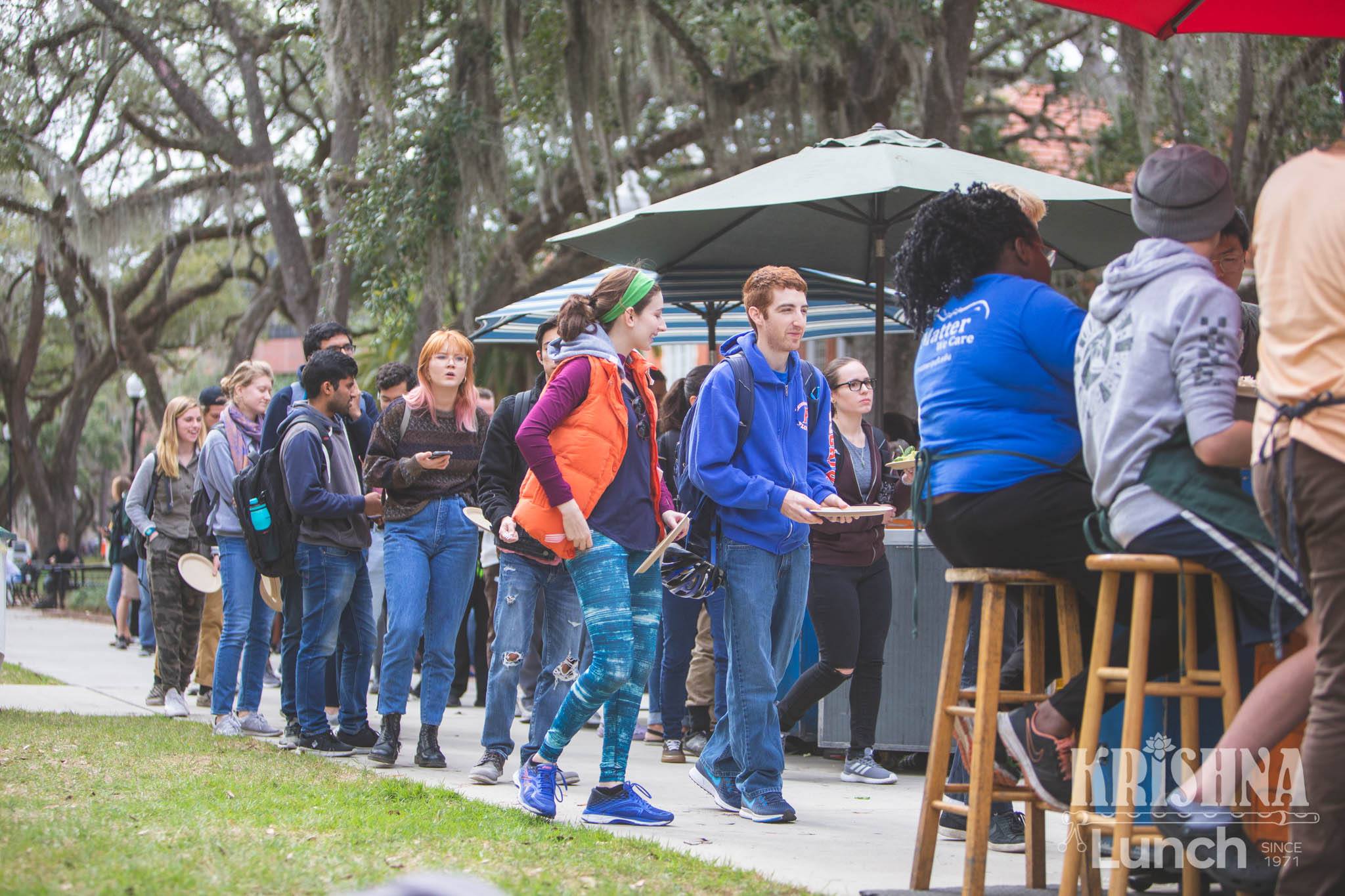
For more than five decades, there was a familiar sight at the Plaza of the Americas around lunchtime.
Students gathered beneath the trees. Plates of fresh vegetarian food passed across the serving line. Friends sat together in the grass while music carried across the Plaza.
It was Krishna Lunch.
What began in 1971 became one of the University of Florida's most enduring traditions. Generations of students ate there; not only vegetarians and vegans, but freshmen stretching their budgets, international students finding community, and Gators who simply wanted an affordable meal and a place to sit with friends.
I was one of them.
As an undergraduate, Krishna Lunch rescued me from more meals of ramen and pizza than I'd like to admit. But what kept bringing me back wasn't simply the food.
It was the experience.
Lunch became an excuse to slow down, sit beneath the trees and spend time with friends in the middle of a busy day. Multiply that experience across decades of students, and you begin to understand why Krishna Lunch became difficult to separate from the Plaza itself.
And now it's gone.
A tradition UF once helped preserve
That is particularly striking because the relationship between Krishna Lunch and UF has not always looked like this.
When the university prepared to renovate the Plaza of the Americas in 2017, Krishna Lunch supporters joined with the UF Foundation for a campaign called Krishna Lunch Forever.
Alumni and friends contributed more than $200,000 toward the Plaza renovation.
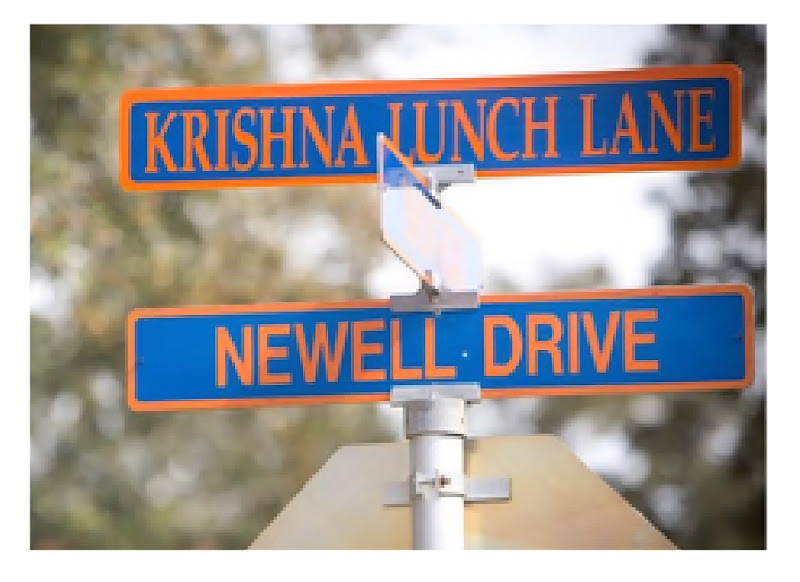
The name of the campaign reflected an assumption that didn't seem particularly controversial at the time: Krishna Lunch belonged to the future of the Plaza as much as it belonged to its past.
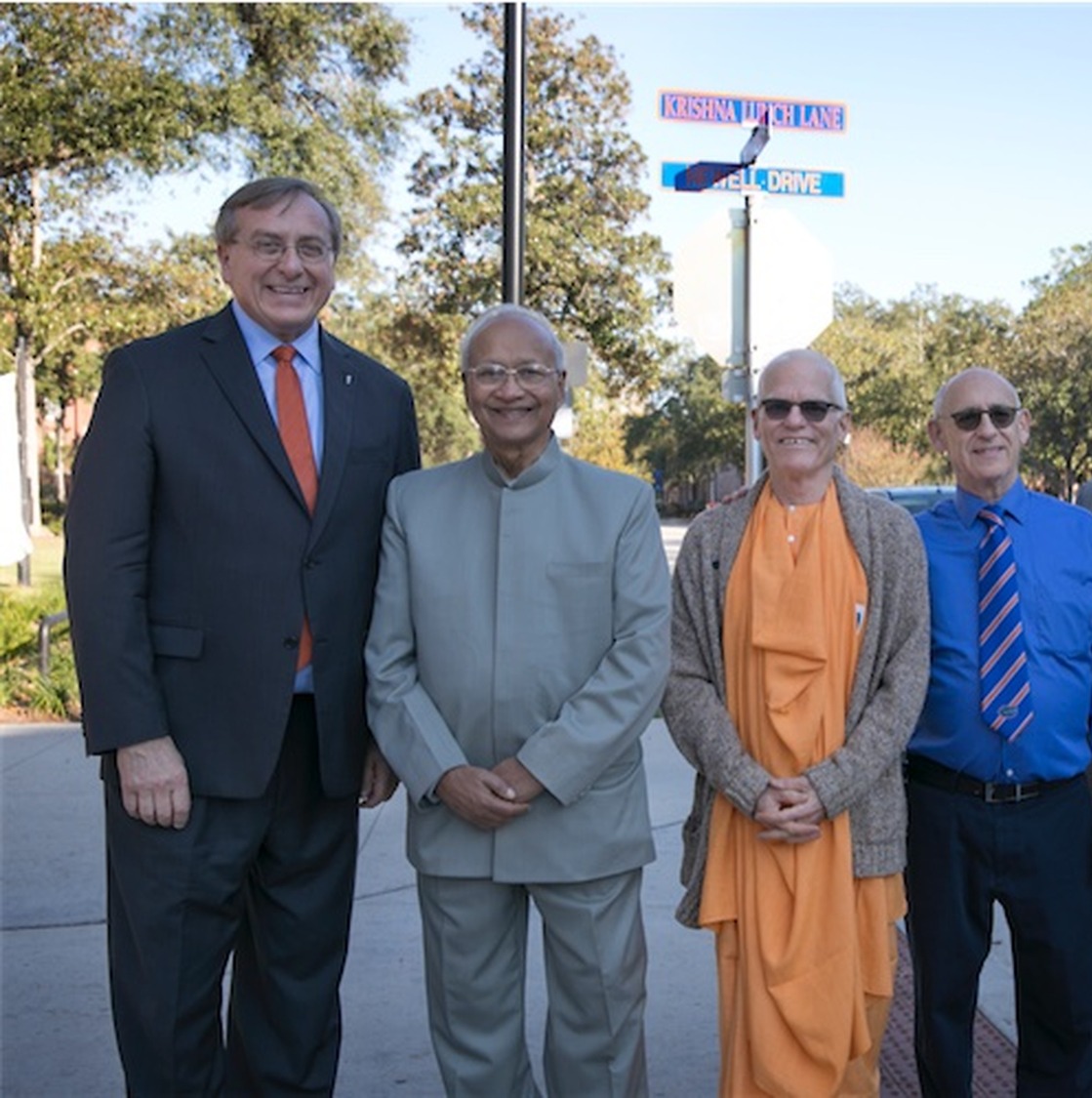
Four years later, UF President Kent Fuchs joined Krishna Lunch supporters to celebrate the program's 50th anniversary.
He expressed his hope that the tradition would continue for another 50 years.
It didn't make it five.
More than lunch
To understand why people care about this, it helps to understand that Krishna Lunch was never simply a food vendor.
Its roots lie in the Vaishnava tradition of prasadam—the practice of preparing vegetarian food with devotion and sharing it freely with others.
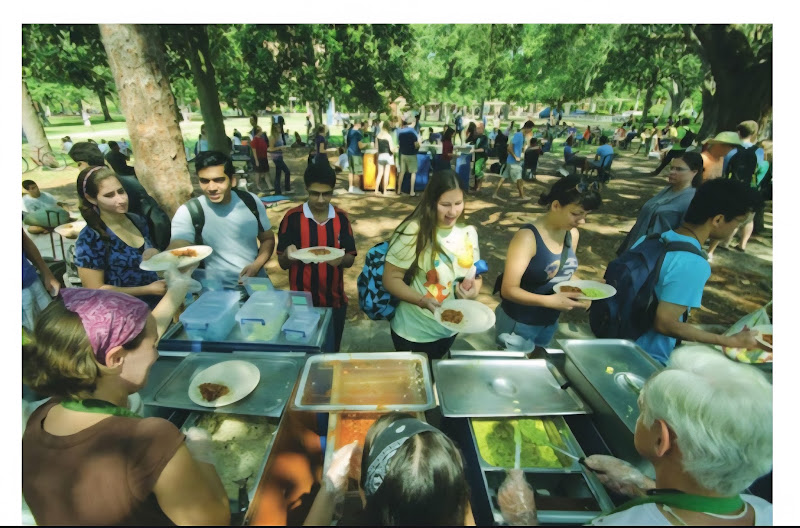
Over the decades, that religious tradition became something remarkably universal on the UF campus.
You didn't have to be Hindu. You didn't have to be religious. You didn't even have to know what Krishna meant.
You could simply get a plate, find a patch of grass and eat.
That simplicity brought together people who otherwise might never have shared a table.
It also provided an unusually accessible option for students looking for vegetarian and vegan food, students struggling to afford meals, and anyone searching for something different from conventional campus dining.
Millions of meals later, Krishna Lunch had become part spiritual tradition, part student gathering place and part Gainesville institution.
So how did 54 years end?
That is the question former students, supporters and community members are now asking.
How does a tradition survive more than half a century, participate in raising hundreds of thousands of dollars for the Plaza it calls home, celebrate its 50th anniversary alongside the university's president—and then disappear from campus only a few years later?
And perhaps more importantly:
Does it have to stay gone?
Institutions change. Policies change. Safety requirements change. A tradition's longevity alone does not mean it should be exempt from reasonable university rules.
But 54 years of history should mean something.
If problems need to be solved, solve them.
If procedures need to change, change them.
If new safeguards are necessary, establish them.
Krishna Lunch had already proposed new safety measures before the March 1 accident, including custom electric carts that would eliminate the need for transport trucks on inner-campus walkways.
The answer does not have to be erasing a tradition that generations of Gators helped build.
The next chapter
Krishna Lunch has survived enormous changes at the University of Florida.
Presidents have come and gone. Buildings have risen. Generations of students have crossed the Plaza, graduated and returned years later to find another generation sitting beneath the same trees with the same familiar plates.
That continuity is rare.
The question facing the Gator community isn't simply whether we liked the food.
It's whether a tradition that has fed and brought together generations of students deserves an opportunity to continue adapting and serving the next one.